
How to Keep Concrete from Freezing Too Soon
Winter doesn’t pause construction schedules—but it certainly makes them more demanding. When temperatures drop below 40°F (4°C), proper concrete curing becomes critical to protecting your project timeline and structural integrity.
Fresh concrete depends on a precise balance of temperature and moisture to reach its designed strength. When conditions fall too cold, the hydration process slows dramatically—or stops entirely. If concrete freezes within the first 24 hours, it can lose up to 50% of its potential strength. That’s not just a quality concern—it’s a safety risk and a costly setback no contractor can afford.
The key to preventing these failures lies in preparation and temperature control. With the right equipment, enclosures, and curing systems, you can maintain stable conditions and achieve consistent results, even in the harshest winter environments.
At REIC Specialty, our heating and climate-control experts have partnered with construction teams across North America to design and implement proven solutions that keep concrete curing on schedule. Below are four field-tested strategies that deliver reliable, high-quality performance under the harshest cold-weather conditions.
1. Maintain Proper Temperature During the Critical Period
The first 24–48 hours after placement are pivotal. During this window, concrete should be maintained at a minimum of 50°F (10°C) to support hydration and strength development.
Although concrete produces its own heat during curing (the heat of hydration), that heat dissipates quickly in cold conditions without protection. The result can be reduced strength, schedule delays, and potential structural concerns.
Effective temperature control requires consistent, uniform heating—not hot spots or swings. Traditional devices often create uneven temperatures, which can lead to thermal cracking and inconsistent curing.
REIC’s flameless heating systems deliver even, moisture-safe heat across large areas, maintaining steady temperatures throughout the critical curing period without combustion emissions or drying out the mix.
Key Considerations for Temperature Maintenance
- Continuously monitor in-place concrete temperature during the first 48 hours.
- Limit internal temperature differentials to ≤ 20°F (10°C) within the concrete mass.
- Maintain ambient conditions around the placement at a temperature of 50°F (10°C) or higher.
- Prevent freezing for 3–7 days (or until the required strength is achieved), based on project specifications.
The goal isn’t just achieving a minimum temperature—it’s maintaining stable, uniform conditions that allow concrete to gain strength without thermal stress.
2. Create Proper Enclosures and Insulation
Maintaining temperature begins with shielding concrete from cold air and wind. Even with high-quality heating equipment, poor enclosure design can waste energy and create uneven curing conditions.
Effective enclosures serve several purposes:
- Retain the heat produced by the concrete and supplemental heating systems.
- Protect against wind chill, which accelerates heat loss.
- Establish a controlled environment where temperature and moisture levels can be accurately monitored and maintained.
Temporary enclosures may range from simple polyethylene sheeting for smaller pours to fully heated structures for large-scale projects. The key is to minimize heat loss while maintaining adequate ventilation to prevent moisture buildup and overheating.
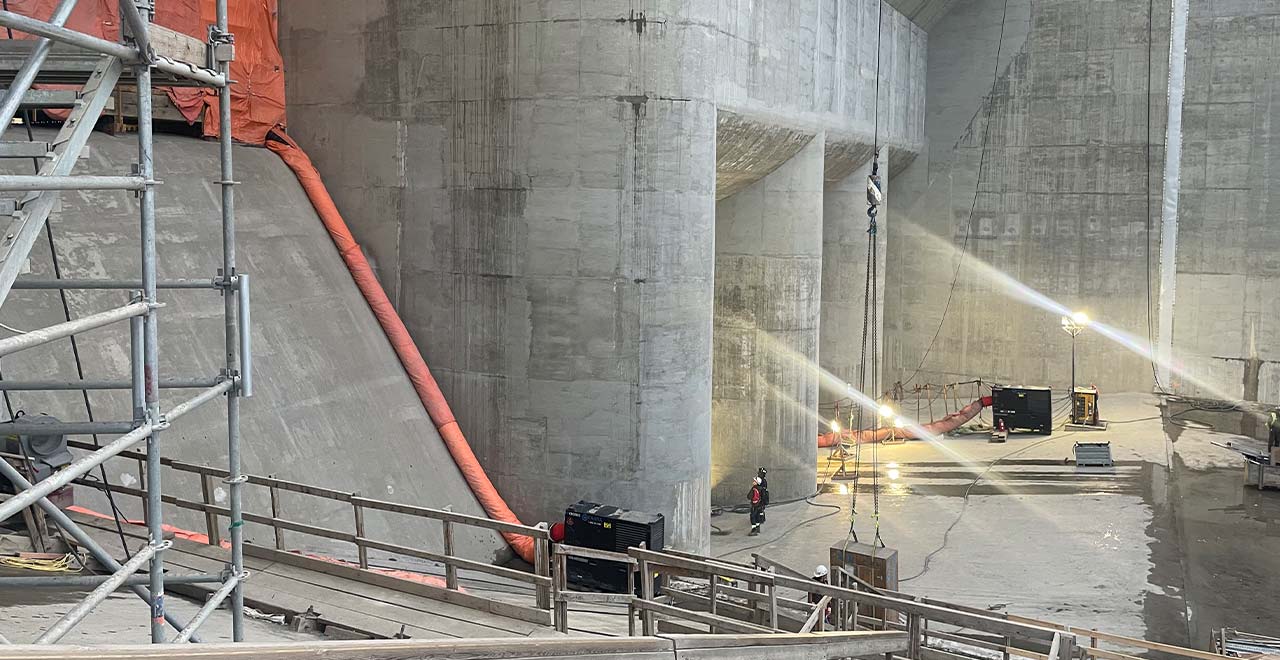
Successful cold-weather projects demonstrate the value of proper enclosures and reliable heating. When subfreezing temperatures threaten progress, enclosing curing areas and using controlled, flameless heat ensures stable curing conditions, prevents delays, and maintains quality performance throughout the winter.
For added protection, insulated blankets should be applied to exposed surfaces, such as slabs and walls, immediately after finishing. These blankets trap hydration heat and shield against freezing, maintaining stability throughout the critical curing period.
Contractors across North America rely on REIC’s enclosure design support and portable heating technology to maintain performance and keep winter projects on track.
3. Use Heated Mixing Water and Aggregates When Necessary
Cold-weather prevention starts long before concrete reaches the forms. When ambient temperatures fall below freezing, heating the mix itself becomes essential to achieving the proper placement temperature and ensuring long-term durability.
According to the American Concrete Institute (ACI), the ideal temperature for fresh concrete placement in cold weather is 50°F–70°F (10°C–21°C). Reaching this range requires careful coordination and intentional heating of mixing water and aggregates.
Recommended Heating Practices
- Heat mixing water up to 140°F (60°C), ensuring it’s blended with aggregates before adding cement to prevent flash setting.
- Warm aggregates to eliminate ice and snow buildup.
- Collaborate with ready-mix suppliers to make adjustments for cold-weather mixes.
- Monitor temperature fluctuations to prevent thermal variation and maintain target placement temperatures.
JetHeat, part of REIC’s flameless heating technology portfolio, provides clean, efficient, and precise heat to warm aggregates and water safely—ensuring a stable, uniform mix temperature before placement.
Never apply heat directly to cement, as it can cause flash setting and weaken the final product. The objective is to achieve uniform, balanced temperatures that allow for consistent curing from start to finish.
4. Extend Protection Time Based on Strength Requirements
Cold-weather concrete demands extended protection periods compared to normal curing conditions. The exact duration depends on your project’s strength requirements and environmental exposure.
As a rule, concrete should remain protected until it reaches a minimum compressive strength of 500 psi (3.5 MPa) to resist freezing damage. For structural elements or those exposed to freeze-thaw cycles, protection should continue until they achieve at least 70% of their design strength.
Because strength development slows significantly at lower temperatures, achieving these milestones can take much longer. For instance, concrete curing at 40°F (5°C) develops strength at roughly half the rate of concrete curing at 70°F (21°C)—meaning a three-day target could stretch to six days or more.
To confirm when protection can safely be removed, rely on field testing rather than time estimates. Maturity meters and break tests provide precise data on actual strength gain, removing guesswork and minimizing risk.
With REIC’s 24/7 service and dependable rental fleet, contractors can maintain extended protection confidently—knowing they have the support, equipment, and expertise to keep curing consistent and compliant.
While extended protection adds cost and time, it’s a small investment compared to the expense and disruption of concrete remediation.
Keep Your Construction Schedule on Track This Winter
Cold-weather concrete curing doesn’t have to delay your project or compromise quality. By following these four proven strategies—maintaining proper temperatures, creating effective enclosures, utilizing heated materials, and extending protection based on actual strength development—you can keep your operations running smoothly throughout the entire season.
When timelines, safety, and performance are non-negotiable, partner with REIC—a leader in environmental control and specialty rental solutions. Our flameless heating technology and expert support teams deliver consistent, efficient performance, keeping concrete curing on schedule and projects moving forward, regardless of weather conditions.
Ready to get started? Contact REIC Specialty today to discuss your cold-weather concrete curing needs and discover how our technology and expertise can keep your next project on track—throughout the entire winter season.