
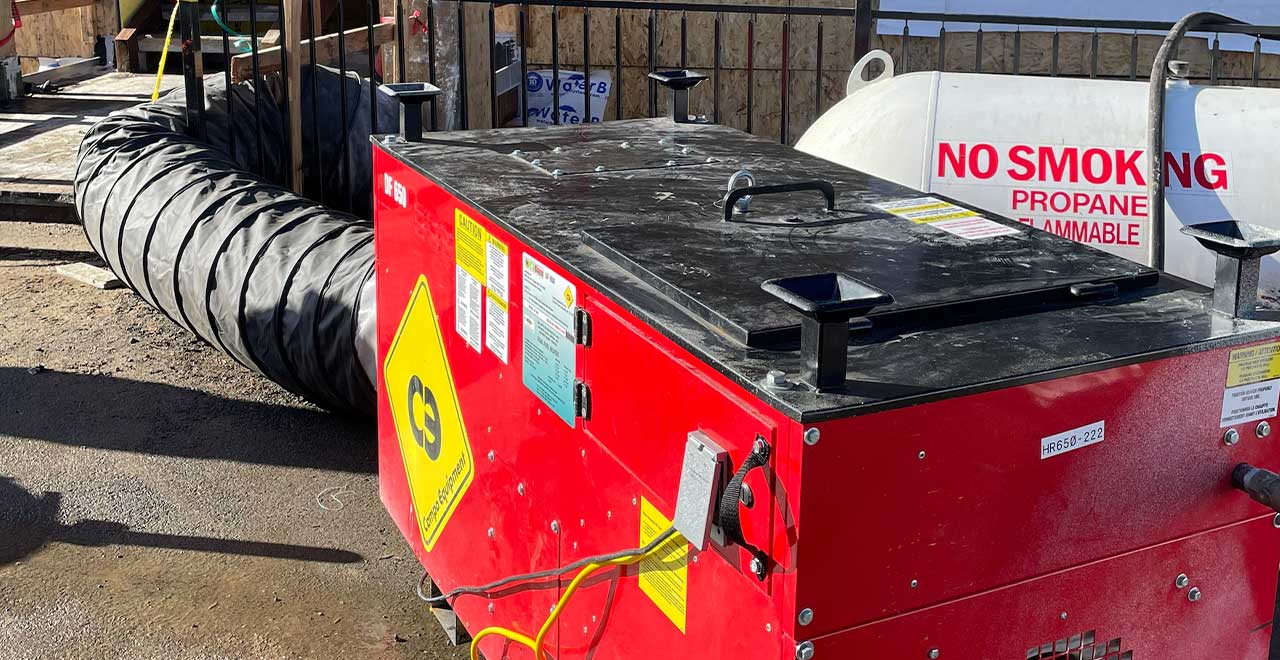
For large-scale construction projects—such as commercial developments, industrial facilities, hospitals, and infrastructure—temporary heating is more than a comfort measure. It’s an essential part of maintaining schedules, protecting materials, and ensuring worker safety during cold seasons.
As temperatures drop, construction sites face multiple environmental challenges:
- Delayed curing of concrete, coatings, and finishes
- Moisture buildup from seasonal humidity and rain intrusion
- Worker discomfort and reduced productivity
- Frozen pipes and materials, leading to damage or rework
- HVAC gaps, since permanent systems often aren’t operational during construction
Without reliable temporary heating, these factors can disrupt workflows, compromise quality, and drive up costs. That’s why major construction contractors partner with REIC Specialty to integrate heating and climate control into their project plans—rather than treating them as afterthoughts.
The Challenges of Heating Large Construction Projects
Scale & Complexity
Major construction projects often involve millions of square feet, multiple structures, and staggered construction phases. Heating these spaces requires careful planning, strategic equipment placement, and high-capacity systems that can maintain consistent temperatures across diverse zones.
Weather Variability
Fall and winter bring unpredictable temperature swings, humidity spikes, and precipitation. Without proactive heating, these conditions can cause condensation on cold surfaces, slow drying, and create unsafe working environments.
Unfinished Envelopes
Partially enclosed structures are particularly challenging—they allow cold air and moisture to enter freely while trapping humidity inside. Traditional heating methods often struggle to keep up, and improper application can exacerbate moisture issues.
Material & Finish Sensitivity
Concrete, coatings, flooring, drywall, and adhesives all have specific temperature and humidity requirements for proper application and curing. Failure to maintain these conditions leads to extended timelines, quality issues, or expensive rework.
The Role of Temporary Heating
Temporary heating provides stability and continuity during the coldest, most unpredictable months of the year. When properly designed and implemented, heating systems:
- Maintain consistent temperatures for safe and efficient work
- Accelerate drying and curing, keeping finishes on schedule
- Protect materials and structures from freeze damage or moisture issues
- Enhance worker productivity and safety in harsh conditions
- Bridge the gap until permanent HVAC systems are fully operational.
REIC Specialty’s Heating Solutions for Major Projects
REIC Specialty provides a comprehensive range of temporary heating solutions, specifically designed for the scale and complexity of major construction sites. Our systems are engineered for performance, efficiency, and safety—regardless of the challenging conditions.
Indirect-Fired Heaters
Indirect-fired heaters are best for large enclosed spaces, interiors under construction, or sites needing clean, dry air. By heating air through a heat exchanger, they keep combustion byproducts outside, protecting finishes and maintaining air quality—ideal for office towers, hospitals, warehouses, and high-rise interiors.
Flameless Heaters
Flameless heaters are best for environments where open flames or emissions aren’t allowed, such as hospitals, refineries, or sensitive sites. With an efficiency of over 97%, long-distance ducting capability, and high static pressure, they deliver dry, breathable heat that protects finishes, materials, and critical operations.
Integrated Heating & Dehumidification Systems
Heating alone can increase humidity and cause condensation. By pairing heaters with desiccant or refrigerant dehumidifiers, REIC creates balanced conditions for drying and curing—especially critical for concrete pours, flooring installations, and interior finishes in large spaces.
Typical Applications on Major Construction Sites
Temporary heating supports multiple stages and types of work during large projects:
Concrete Work & Flooring
- Prevents freezing and accelerates curing during cold-weather pours.
- Supports the proper installation of flooring materials that are sensitive to moisture and temperature fluctuations.
Finishes & Coatings
- Maintains the manufacturer-specified conditions for adhesives, paints, coatings, and sealants.
- Prevents condensation that can compromise adhesion or surface quality.
Interior Fit-Out
- Ensures worker comfort and steady temperatures for drywall, carpentry, and finish work.
- Protects installed materials from warping, cracking, or mold growth due to uncontrolled environments.
Enclosure Drying
- Quickly dries out large spaces after rain or snow events.
- Stabilizes humidity inside partially enclosed buildings, allowing work to continue uninterrupted.
Scenario: Heating a Multi-Building Campus Project
A general contractor overseeing a major healthcare campus expansion in the Northeast encounters freezing temperatures just as interior fit-out begins. With permanent HVAC systems not yet operational and more than 750,000 sq. ft. needing controlled conditions, the project is suddenly vulnerable to costly delays. Drywall, coatings, flooring, and other finishes all rely on stable temperatures and humidity—conditions the winter weather is poised to disrupt.
REIC’s Solution:
REIC Specialty would deploy indirect-fired heaters to deliver clean, dry air throughout patient wings and administrative areas, while flameless heaters would support sensitive spaces where emissions are restricted. Desiccant dehumidifiers would control humidity and prevent condensation. Strategic ducting and air movers would distribute heat evenly, and remote monitoring would track temperature and humidity in real time, ensuring consistent conditions as outdoor weather conditions change.
Result:
With controlled heat and humidity, the contractor would maintain ideal working conditions, keep sensitive finishes protected, and avoid costly schedule delays—even in the midst of harsh winter weather.
Best Practices for Implementing Temporary Heating
- Plan Early
Incorporate temporary heating strategies during preconstruction. Early planning ensures proper sizing, budget allocation, and seamless integration into the construction schedule. - Size Systems Accurately
Oversizing wastes energy; undersizing fails to meet environmental targets. REIC engineers design systems to meet the specific BTU load requirements for each zone. - Balance Heat & Humidity
Heating without dehumidification can lead to condensation. Integrated systems provide stable temperature and humidity, crucial for large-scale finishing work. - Distribute Air Strategically
Utilize ducting and air movers to eliminate hot/cold zones, ensuring even coverage across expansive interiors. - Monitor Continuously
Install sensors to track temperature and humidity in real time, allowing for proactive adjustments as weather conditions change. - Partner with Specialists
Work with experienced providers like REIC Specialty to handle logistics, equipment setup, monitoring, and adjustments throughout the project.
The REIC Specialty Advantage
Contractors overseeing major construction projects trust REIC Specialty because we deliver far more than temporary heat—we deliver project continuity, environmental stability, and peace of mind. Our expertise and fleet are built to support the scale, speed, and complexity of large builds.
- Expert Engineering & Sizing: Precision-designed solutions for complex, multi-building, and high-volume sites.
- Nationwide Fleet & 19 Locations: Fast, reliable deployment wherever the project demands.
- 24/7 Response: Immediate support for weather shifts, emergencies, or schedule changes.
- Advanced Heating Technologies: Industry-leading flameless, indirect-fired, and high-capacity systems.
- True Turnkey Services: Planning, installation, optimization, on-site monitoring, and final removal.
- Integrated Heat & Dehumidification: Complete climate control to protect materials, accelerate schedules, and maintain quality.
Keep Your Project on Schedule—No Matter the Weather
Cold weather doesn’t have to mean costly construction delays. With REIC Specialty’s temporary heating solutions, major projects can continue safely, efficiently, and on schedule—even in the harshest winter conditions.
Whether you’re enclosing a tower, finishing interiors, or pouring concrete in freezing temperatures, REIC Specialty has the equipment, expertise, and capacity to keep your project moving forward.
Be prepared for the next cold front. Contact REIC Specialty today to plan a tailored heating and moisture control strategy for your upcoming project.